Talking about the benefits of multilingualism over strawberry or vanilla ice cream
176 icecreams
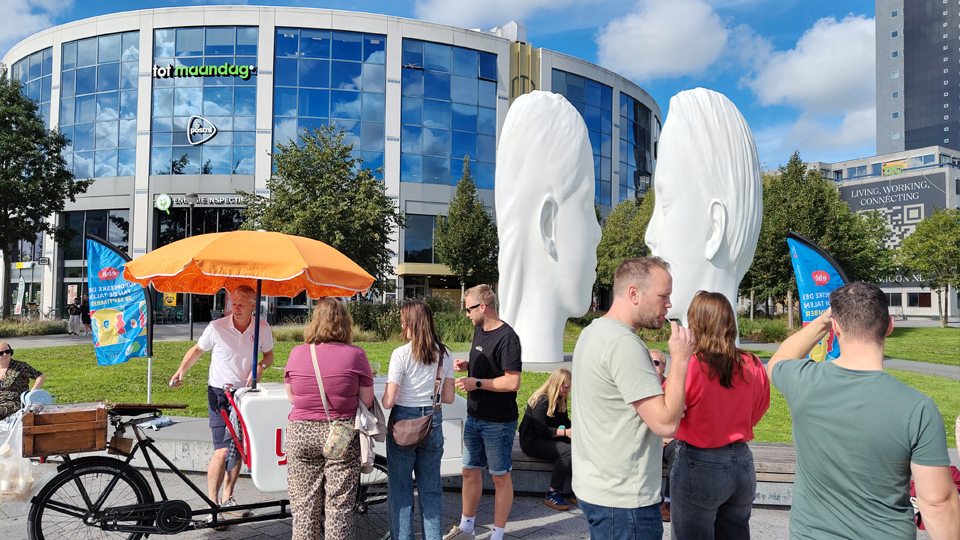
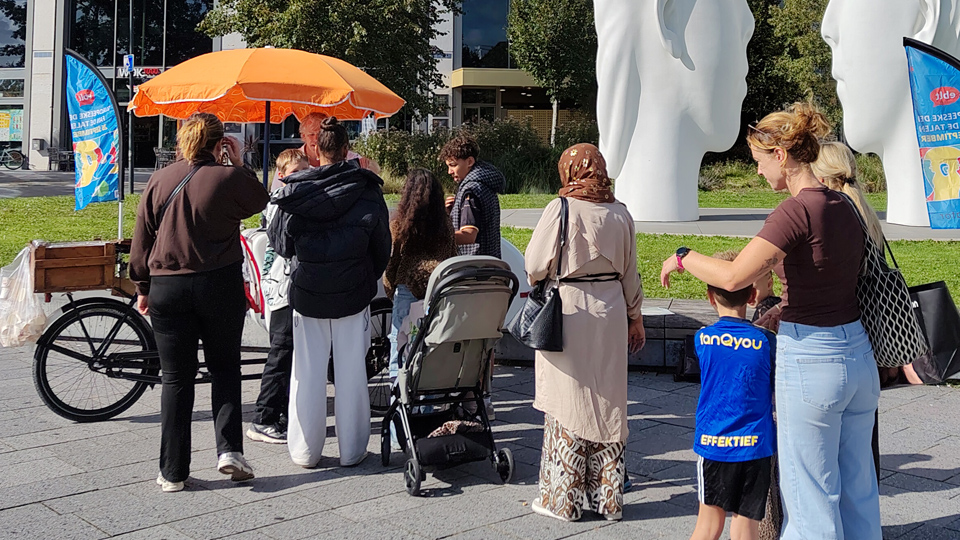
In less than two hours, Jan the Ice Cream Man handed out 176 ice creams to passers-by. Whilst they enjoyed strawberry or vanilla ice cream, a conversation arose about languages and multilingualism: which languages do you actually speak? Did you know that about each other as friends? What’s your favourite word? What are the benefits of multilingualism?
Yung Frysk was also there to film the whole event. The result can be found on their Youtube Channel. Yung Frysk is a language promotion project run by Afûk and Omrop Fryslân to get young people aged between 16 and 22 excited about Frisian and to encourage them to use Frisian in everyday life.
European Day of Languages
The European Day of Languages is an initiative of the Council of Europe and has been celebrated since 2001. There are more than 200 languages in Europe. At the Council of Europe, 82 regional or minority languages from 207 language communities have been recognised. In the Netherlands, these include Frysk, Yiddish, Limburgish, Lowlands Saxon, Papiamints and the languages of Roma and Sinti.
EBLT and Mercator European Research Centre on Multilingualism and Language Learning
The European Bureau for Lesser Used Languages, EBLT, is an umbrella body dedicated to the promotion and protection of minority languages in the Netherlands. More than 20 organisations are affiliated to the EBLT that work for the position of Frisian, Low Saxon, Bildts or Papiamentu. The Mercator European Research Centre on Multilingualism and Language Learning (part of the Fryske Akademy) researches multilingual education and language learning in Europe. It is an independent and recognised provider of knowledge and information, especially on regional and minority languages in Europe.