
![[Translate to English:] Geurûndersiker Eveline de Smalen by de lansearring fan Een Neus voor Erfgoed yn Museum Joure (foto: GewoanDwaan, Douwe Bijlsma)](/fileadmin/_processed_/0/0/csm_Eveline_Start_Neus_voor_Erfgoed_Foto_Gewoan_Dwaan_-_Douwe_Bijlsma_95_04ccc2e2d2.jpg "[Translate to English:] Geurûndersiker Eveline de Smalen by de lansearring fan Een Neus voor Erfgoed yn Museum Joure (foto: GewoanDwaan, Douwe Bijlsma)")
[Translate to English:] Geurûndersiker Eveline de Smalen by de lansearring fan Een Neus voor Erfgoed yn Museum Joure (foto: GewoanDwaan, Douwe Bijlsma)
Scent researcher Eveline de Smalen will speak about the scents of Fryslân during Akademydag
What exactly does “A Nose for Heritage” mean?
“A Nose for Heritage is a collaborative project between the KNAW Humanities Cluster (Meertens Institute and NL-Lab), International Flavors & Fragrances (IFF), and the Fryske Akademy. Together with my colleagues, I am researching Frisian scent heritage: which scents truly make Friesland what it is, and how have characteristic scents changed over time?”
“To find out, we’ve distributed a questionnaire that’s open to anyone with a connection to Fryslân. We’re also hosting workshops featuring a ‘scent exploration station.’ Using that, I’ll talk with small groups of ‘scent explorers’ about specific scents and what they mean to them. I’ll also be researching scents in literature and archives.”
“Ultimately, we want to select about ten or eleven scents that tell the story of Fryslân through scent. We’ll present these scents in a museum or heritage institution, and perhaps even in a traveling exhibition that takes a ‘scent tour’ of the Eleven Cities.”
How unique is research on scents?
“Our research stems from Odeuropa, a project on olfactory heritage in Europe that has collected historical scents from across the continent. It may seem difficult to distill all of Fryslân’s scents into a single, coherent collection of scents that capture the essence of Fryslân—and it is! But if it’s been done successfully for all of Europe, then it will certainly work for Fryslân as well.”
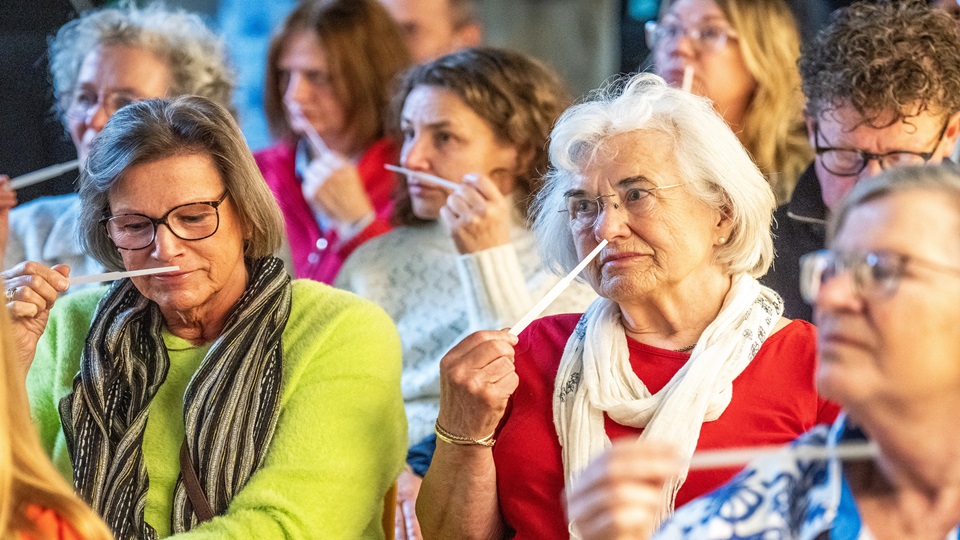
Why do you want to capture scents?
“Scent is interesting because it plays such an important role in our daily lives: we use scents to recognize our surroundings and other people, and to assess whether we’re safe. A large part of our sense of taste is also determined by scent. Scent is emotion. Yet we often don’t realize how important scent is, and we don’t talk about it much either. But it’s precisely by focusing on scent that you discover a part of your daily experiences in a different way—and that enriches your life.”
You grew up in Vlaardingen. Where does your fascination with Fryslân come from?
“I studied English literature. Gradually, I became more interested in the role of nature and the environment in literature from and about the Northern Netherlands. Since 2025, I have been focusing specifically on the Frisian language and culture. As a Tresoar Fellow, I researched the depiction of the Wadden Sea in the work of Durk van der Ploeg, and now I am a visiting researcher at the Meertens Institute and the Fryske Akademy. My connection to Fryslân stems from my love of language and literature.”

What is your personal favorite scent of Fryslân?
“To me, that’s really the scent of the seaside embankment with sheep and the salt marshes. Since I’ve been working on this research, I’ve been paying much closer attention to the smells around me and have discovered all kinds of scents I didn’t even know were there. My tip: pay attention to everything you smell today, and try sniffing something you’ve never smelled before. Who knows what you might discover!”
Participate?
Please fill out the questionnaire for the research project “A Nose for Heritage—What Does Fryslân Smell Like?” Een neus voor erfgoed - Hoe rûkt Fryslân?
Register for Academy Day—Friday, September 11, 2026
The Fryske Akademy cordially invites you to our annual Akademydag, our 88th Dies Natalis. On Friday, September 11, 2026, everyone is welcome to join us starting at 1:30 p.m. at BOEL (formerly Zalen Schaaf) in Leeuwarden to raise a glass, chat, and play jeu de boules!
Register
Please use this registration form.
Program
1:30 p.m. Doors open with coffee/tea
2:00 p.m. Opening remarks (by Nelleke IJssennagger-van der Pluijm, Fryske Akademy)
2:15 p.m. Lecture by Dr. Mans Schepers (environmental archaeologist, University of Groningen) on vegetation and scents during the reign of King Redbad
2:40 p.m. Presentation of the Fryske Akademy Thesis Award 2026
3:00 p.m. Short break
3:15 p.m. Induction of new Academy members
3:45 p.m. Lecture by Dr. Eveline de Smalen (Fryske Akademy and Meertens Institute) on the research project “A Nose for Heritage”
4:10 p.m. Drinks, jeu de boules, scent table
Practical Information
Date: Friday, September 11, 2026
Location: BOEL (Zalen Schaaf)
Address: Breedstraat 48, 8911 GJ Leeuwarden