

Milestone for the Online Dutch-Frisian Dictionary
This article was previously published in our magazine Ut de Smidte (Simmer 2026)
Hindrik, first off, the most obvious question: what do you mean by a ‘lemma’?
Hindrik Sijens: “A lemma is a headword, but also the entire entry that goes with it. When we say we’ve put a lemma online, we mean the headword along with its translation, examples and language-specific features, such as expressions and idioms.”
And now this milestone – congratulations! But just how big is this, actually?
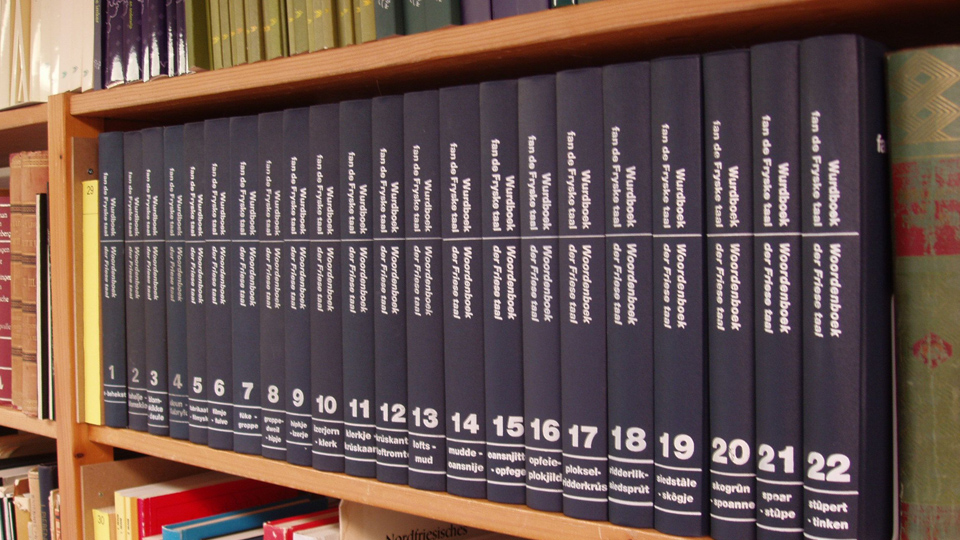
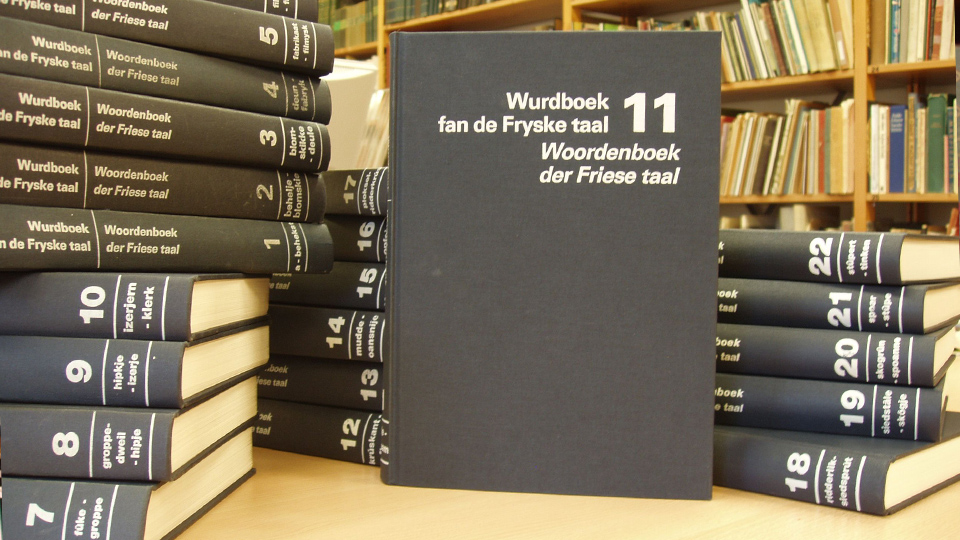
“The Great Dictionary of the Frisian Language (WFT) consists of 25 volumes and contains around 125,000 lemmas. The ONFW now stands at 75,000 lemmas, and the Frisian Pocket Dictionary at 70,000. So the online dictionary is the second-largest Frisian dictionary. And we still need to add around 10,000 commonly used, frequent Dutch words, so we’ll end up with at least 85,000. Now that we’re dealing with digital storage, it no longer matters how big the dictionary becomes. We’re no longer limited by the number of pages.”
But you won’t reach the 125,000 entries in the paper dictionary, will you?
"No. The large printed Dictionary of the Frisian Language is really a description of the Frisian language between 1800 and 1975. What we’re doing now is creating a practical dictionary, which should help people write in Frisian. This ONFW is for Dutch speakers who want to know a Frisian word, but also for native Frisian speakers who think: ‘How do I spell that again?’ Then they look up a Dutch word to find the Frisian equivalent.”
How labour-intensive is it to create an online entry like this?
“It can be very labour-intensive. This morning I came across the word ‘smaakvol’ in Dutch. You spend longer thinking about that than about a word like ‘table leg’ – with the latter, you’re done in a minute, so to speak. With ‘smaakvol’, you first have to work out what the Frisian equivalent might be, what the context is, where the word is used, and also whether there are certain collocations or patterns in Dutch, such as ‘smaakvol gekleed gaan’."
“Translating a word like ‘hand/hân’ is very easy. But for idioms or combinations such as ‘to keep something in hand’ or ‘to get a grip on it’, we also need good Frisian translations. With a word like ‘hand’, there are loads of collocations, idioms and proverbs to be found. You could spend days on that. Fortunately, we’re all native speakers here and can search through old dictionaries and the Taaldatabank. This is a database of digitised Frisian texts from the 19th and 20th centuries, containing around 25 million words. We can look up words there to see in which combinations with other words a particular word is often used.”
What was the 75,000th word?
Laughing: “I actually can’t remember! We’ve added quite a few more words since then. But if I look in our editorial system at the date we reached that milestone, I’d say: ‘allerergst’. That’s been translated as ‘alderslimst’.”
And that wasn’t in the ONFW yet?
“No, it wasn’t. We have a list of 150,000 Dutch words and their frequency. We’re working through that list. Words like ‘badpak’, ‘afgrijselijk’ en ‘berouw’ (‘swimsuit’, ‘horrible’ and ‘remorse’ are used frequently, so they definitely need to be in the online dictionary. But there aren’t really any gaps in Frysker.nl at the moment. The fact is that the ONFW is included in Frysker’s search function, and Frysker.nl also contains the digitised Dutch-Frisian Dictionary from 1985. As a result, ‘berouw’ can already be found via Frysker’s search bar, but as soon as we’ve edited it, our new entry will replace the old description.”
So ‘alderslimst’ was in Frysker, but now it’s been given a new look?
“Exactly. We – that is, Janneke Spoelstra, Louw Biesma, Johan van der Zwaag, Willem Visser and I – try to provide users with standard Frisian, whilst at the same time showcasing the richness of the language through both new and older words, so that people have a choice. We could be very prescriptive and say that we don’t include Dutch loanwords, but we can also say that Frisian is a living language. Where is the line drawn? We all want to keep the Frisian language alive."
